Motka
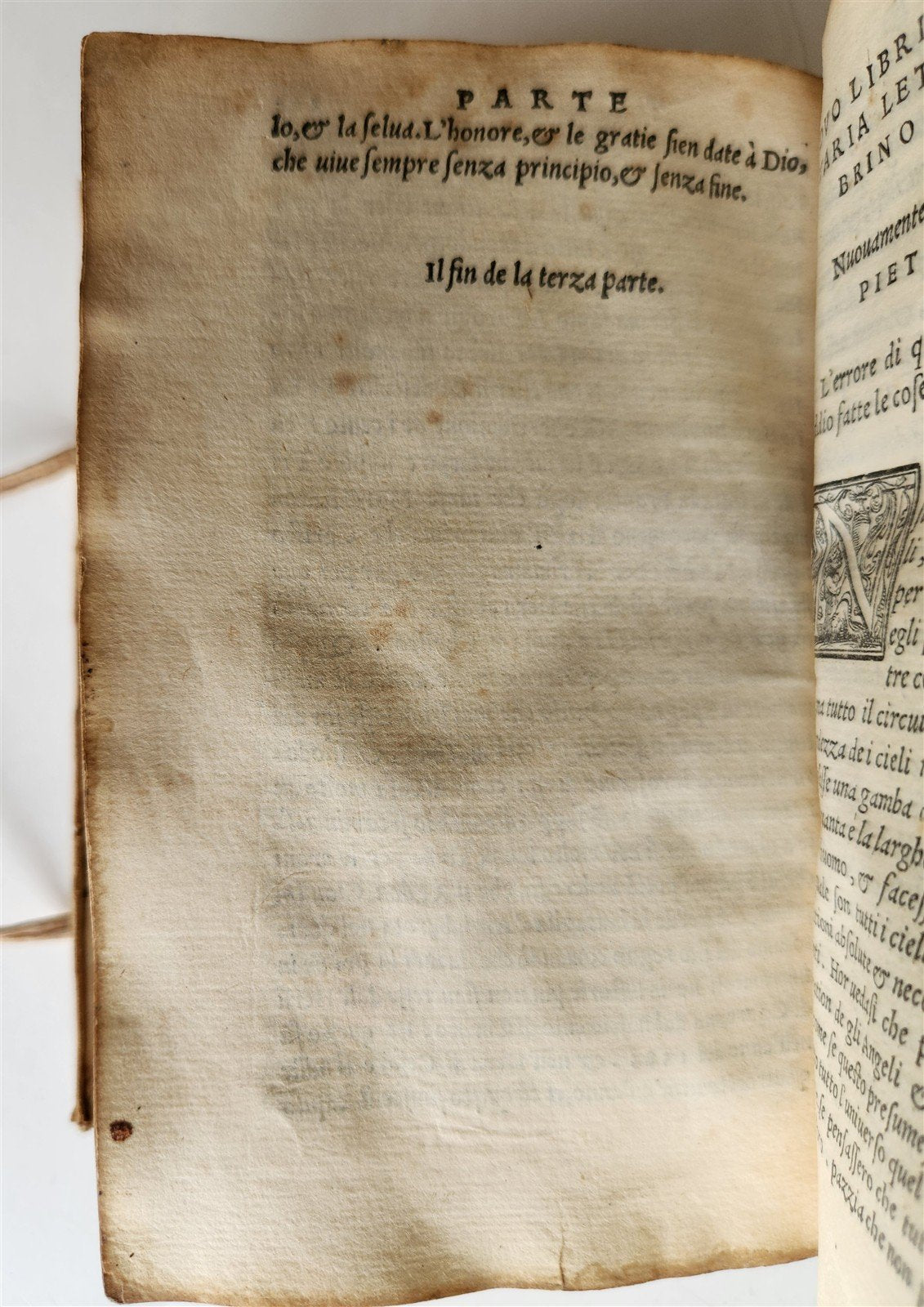
1550 Pietro Messia DELLA SELVA DI VARIA LETTIONE antique ENCYCLOPEDIA RARE
1550 Pietro Messia DELLA SELVA DI VARIA LETTIONE antique ENCYCLOPEDIA RARE
Regular price
$449.40 USD
Regular price
$642.00 USD
Sale price
$449.40 USD
Unit price
per
Couldn't load pickup availability
I TRE LIBRI
DELLA SELVA DI VARIA LETTIONE DI PIETRO MESSIA SIVIGLIANO
tradotti nella lingua Italiana per Mambrino Roseo de Fabriano
by Pietro Messia (Pedro Mexia)
Venice; [1550]
Repaired vellum binding with ties (front cover used original vellum, the vellum on the spine and back cover is replaced- renewed)
Spine with raised bands, untrimmed edges, new endpapers.
Interior with some wear, period manuscript entries to the pastedowns
Size 4 1/4 by 6 1/4 inches
Text in Italian
============================
One of the major works of the historian Pedro Mexia, chronicler of Charles V, who collects here a great harvest of erudite articles on the most varied subjects: they sound like bizarre curiosities, but are at the same time a very useful and interesting source for understanding the beliefs of the time
Extremely rare.
=============================
Pedro Mejía (old Spanish spelling: Pero Mexía), (1497 – 1551) was a Spanish Renaissance writer, humanist and historian.
He was born and died in Seville, where he lived for the majority of his life and for which there is always a special affection in his writings.
He studied humanities and law at Seville and Salamanca universities. He maintained correspondence with Erasmus of Rotterdam, Luis Vives and Juan Gines de Sepulveda. In 1548, he was appointed official chronicler of the court of Emperor Charles V.
His major work is Silva de varia lección (A Miscellany of Several Lessons) , which became an early best seller across Europe.
It is an encyclopedic miscellany or mixture of subjects of interest across the diverse repertoire of humanistic knowledge of the time. The work takes material from the Attic Nights by Aulus Gellius, the Banquet of the Sophists by Athenaeus, the Saturnalia of Macrobius, the Memorable deeds and sayings of Valerius Maximus, the De inventoribus rerum of Polydore Vergil, the Moralia and Parallel Lives of Plutarch and, above all, the Natural History of Pliny the Elder. It also contains work by Erasmus of Rotterdam. Traces of this miscellany can be found in works by Mateo Alemán, Miguel de Cervantes, Shakespeare and Montaigne, to mention only a few of the authors he influenced.
===============================
Please see my other auctions
Thank You
Refund Policy: We will issue a FULL REFUND, 100% money back if you are not satisfied with your purchase. Items must be returned to us within 20 days in order to receive a refund or replacement. Buyer is responsible for shipping costs.