Motka
1559 POLITICAL TREATISE by Franciscus Patricius ANTIQUE original 16th c. binding
1559 POLITICAL TREATISE by Franciscus Patricius ANTIQUE original 16th c. binding
Regular price
$549.50 USD
Regular price
$785.00 USD
Sale price
$549.50 USD
Unit price
per
Couldn't load pickup availability
Patricius, Franciscus
Compendiosa epitome commentariorum in duas partes...
Des. Erasmi brevis collectio...
Paris, for Marnef; 1559
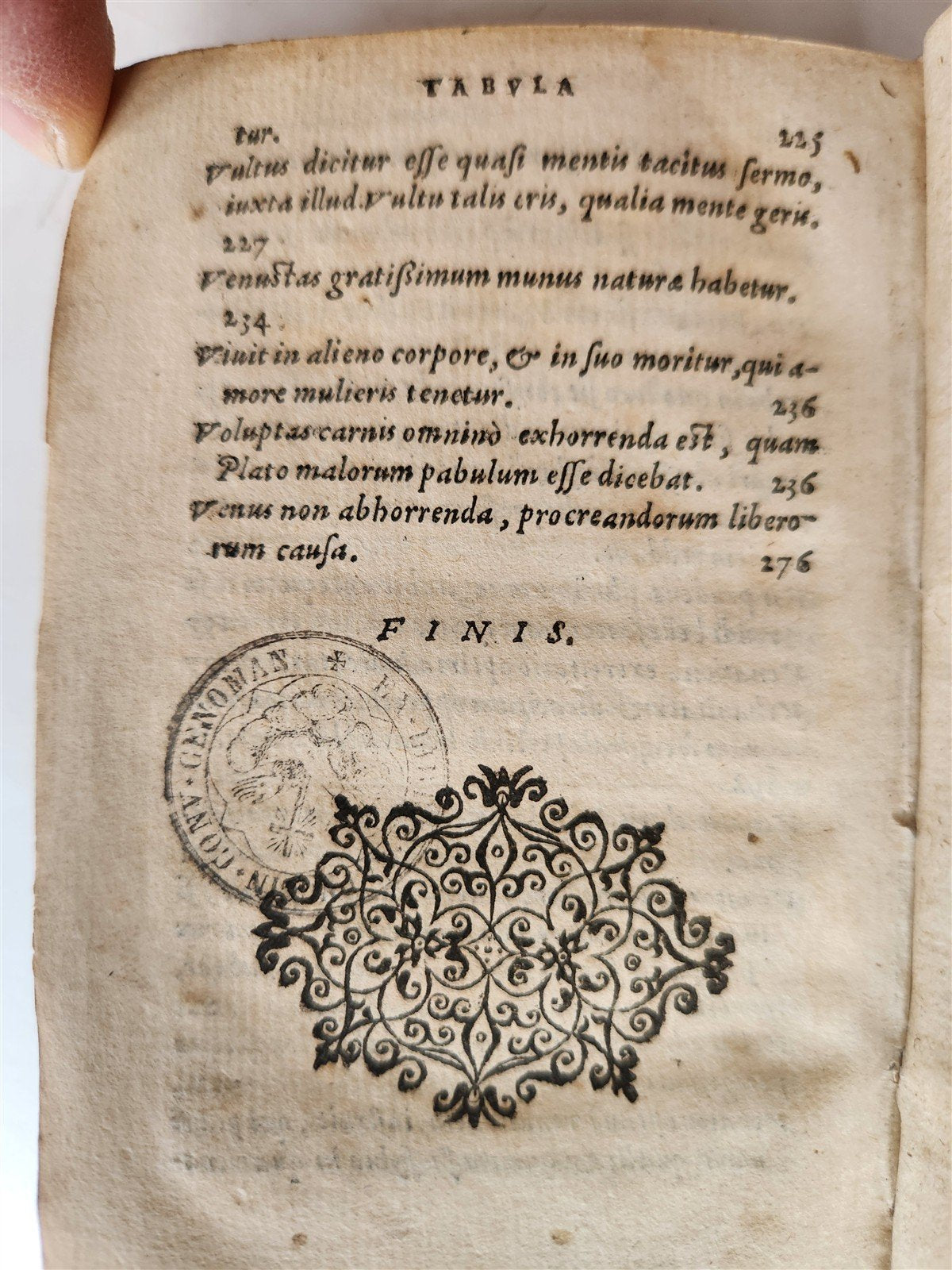
With printer's mark at the title
392 pp., 14 leaves.
Original leather binding with blind tooling, gilt center and corner fleurons, as well as ribbed gilt spine and gilt edges.
Extract from the two principal political works of the Italian writer and Bishop of Gaeta, Franciscus Patricius (Francesco Patrizi, 1413-1492), with which he acquired the reputation of a forerunner of Machiavelli.
Also included are extracts from De institutione principis Christiani by Erasmus and from Quod optima sit monarchia by Stobaeus.
With stamp and period manuscript ownership entry at the title
size: 3 1/4 by 4 3/4 inches
Text in Italian
========================
Francesco Patrizi of Siena (Franciscus Patricius Senensis) (1413–1494) was the most important political philosopher of the Italian Renaissance before the generation of Niccolò Machiavelli (1469-1527) and Francesco Guicciardini (1483-1540).
He was the principal exponent of the humanist tradition of 'virtue politics.'
He was the first Western political philosopher since antiquity to devote sustained attention to the question of how a republic devoted to liberty and equality could uphold meritocratic principles in government—how it could ensure that its rulers and political class generally were public-spirited, well-educated men of virtue and wisdom. He was the first political philosopher since Aristotle to devote sustained attention to citizenship (in both its republican and royal varieties), and the first to explore the potential of a planned urban environment to shape civic values and facilitate a free way of life.
He was also the pioneer of a new ‘historico-prudential’ approach to political thought that applied the study of the humanities, above all history, to the reform of republican and royal institutions.
He acted as governor of Foligno, then in the Papal States, for several years from 1461.
Pius II, who was a personal friend, appointed him bishop of Gaeta in the same year.
========================
Thank You
Refund Policy: We will issue a FULL REFUND, 100% money back if you are not satisfied with your purchase. Items must be returned to us within 20 days in order to receive a refund or replacement. Buyer is responsible for shipping costs.