Motka
1573 CYRIL of ALEXANDRIA antique 16th CENTURY FOLIO Omnia opera quae hactenus
1573 CYRIL of ALEXANDRIA antique 16th CENTURY FOLIO Omnia opera quae hactenus
Regular price
$599.90 USD
Regular price
$857.00 USD
Sale price
$599.90 USD
Unit price
per
Couldn't load pickup availability
Cyrillus Alexandrinus.
Omnia opera quae hactenus summa diligentia reperiri potuere...
2 parts in 1 volume
Paris, for Michel Sonnius; 1573
With woodcut printer's mark at the titles
4 leaves, 1074 columns, 1 blank leaf, 762 columns, 26 leaves.
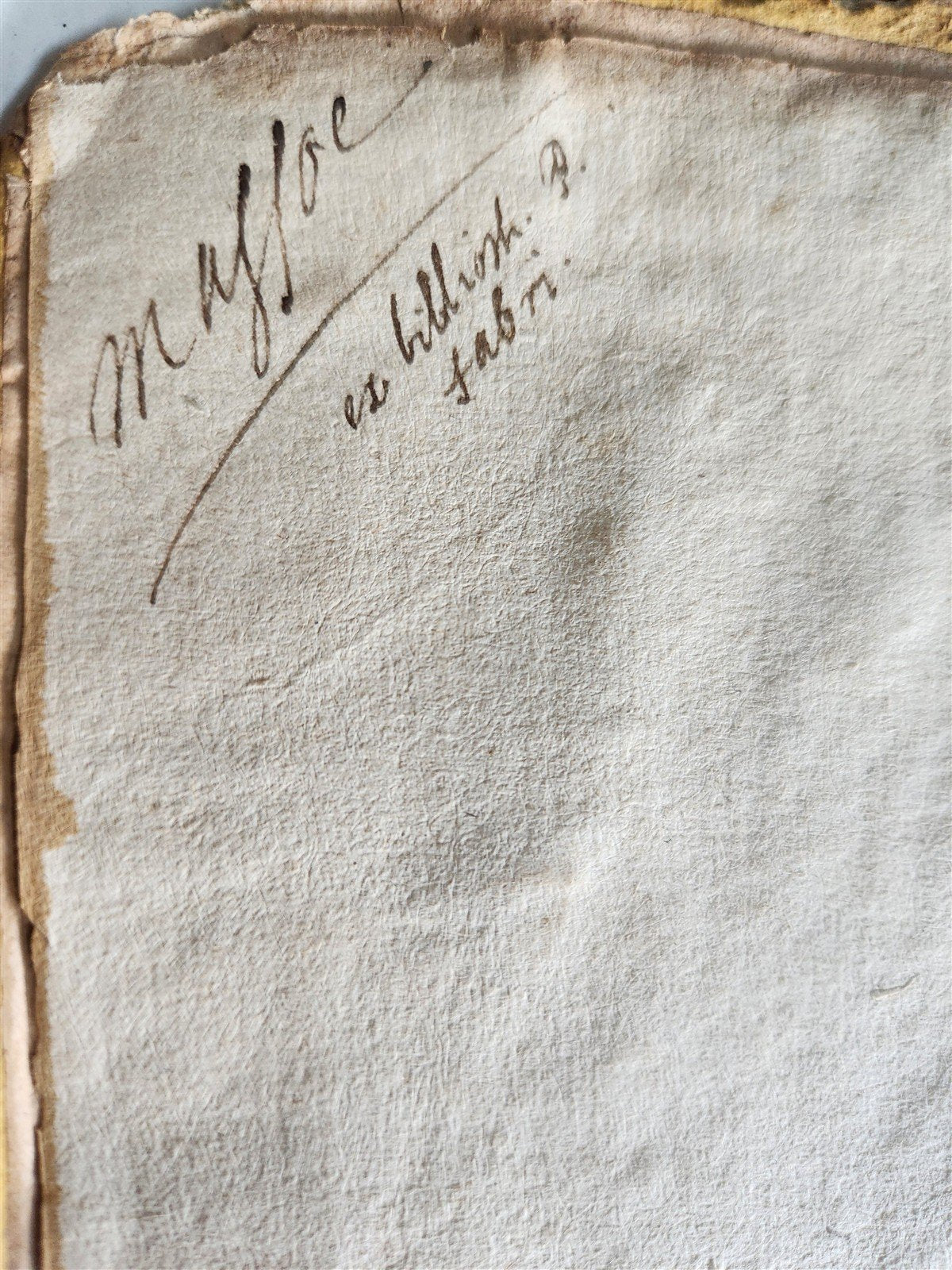
Period reversed leather binding (damaged).
Spine with raised bands decorated in gilt
- Adams, C 3171. Second Latin edition by Sonnius (previously 1572), edited by Gentian Hervet. -
Very good interior
Massive folio. Size 10 by 15 1/4"
Text in Latin
===================
Cyril of Alexandria ( c. 376–444) was the Patriarch of Alexandria from 412 to 444.
He was enthroned when the city was at the height of its influence and power within the Roman Empire. Cyril wrote extensively and was a major player in the Christological controversies of the late 4th and 5th centuries. He was a central figure in the Council of Ephesus in 431, which led to the deposition of Nestorius as Patriarch of Constantinople.
Cyril is counted among the Church Fathers and also as a Doctor of the Church, and his reputation within the Christian world has resulted in his titles Pillar of Faith and Seal of all the Fathers. The Nestorian bishops at their synod at the Council of Ephesus declared him a heretic, labelling him as a "monster, born and educated for the destruction of the church".
Cyril is well known for his dispute with Nestorius and his supporter, Patriarch John of Antioch, whom Cyril excluded from the Council of Ephesus for arriving late. He is also known for his expulsion of Novatians and Jews from Alexandria. He is sometimes thought to have inflamed tensions that led to the murder of the Hellenistic philosopher Hypatia by a Christian mob. Historians disagree over the extent of his responsibility in this.
Cyril tried to oblige the pious Christian emperor Theodosius II (AD 408–450) to himself by dedicating his Paschal table to him.[4] Cyril's Paschal table was provided with a Metonic basic structure in the form of a 19-year lunar cycle adopted by him around AD 425, which was very different from the first Metonic 19-year lunar cycle invented around AD 260 by Anatolius, but exactly equal to the lunar cycle which had been introduced around AD 412 by Annianus; the Julian equivalent of this Alexandrian cycle adopted by Cyril and nowadays referred to as the "classical (Alexandrian) 19-year lunar cycle" would emerge a century later in Rome as the basic structure of Dionysius Exiguus’ Paschal table (AD 525).
Little is known for certain of Cyril's early life.
He was born circa 376, in the town of Didouseya, Egypt, modern-day El-Mahalla El-Kubra.
A few years after his birth, his maternal uncle Theophilus rose to the powerful position of Patriarch of Alexandria.
His mother remained close to her brother and under his guidance, Cyril was well educated. His writings show his knowledge of Christian writers of his day, including Eusebius, Origen, Didymus the Blind, and writers of the Church of Alexandria. He received the formal Christian education standard for his day: he studied grammar from age twelve to fourteen (390–392), rhetoric and humanities from fifteen to twenty (393–397) and finally theology and biblical studies (398–402).
In 403, he accompanied his uncle to attend the "Synod of the Oak" in Constantinople, which deposed John Chrysostom as Archbishop of Constantinople.
The prior year, Theophilus had been summoned by the emperor to Constantinople to apologize before a synod, over which Chrysostom would preside, on account of several charges which were brought against him by certain Egyptian monks. Theophilus had them persecuted as Origenists.
Placing himself at the head of soldiers and armed servants, Theophilus had marched against the monks, burned their dwellings, and ill-treated those whom he captured.
Theophilus arrived at Constantinople with twenty-nine of his suffragan bishops, and conferring with those opposed to the Archbishop, drafted a long list of largely unfounded accusations against Chrysostom, who refused to recognize the legality of a synod in which his open enemies were judges. Chrysostom was subsequently deposed.
Theophilus died on 15 October 412, and Cyril was made Pope or Patriarch of Alexandria on 18 October 412, but only after a riot between his supporters and those of his rival Archdeacon Timotheus. According to Socrates Scholasticus, the Alexandrians were always rioting.
Thus, Cyril followed his uncle in a position that had become powerful and influential, rivalling that of the prefect in a time of turmoil and frequently violent conflict between the cosmopolitan city's pagan, Jewish, and Christian inhabitants
He began to exert his authority by causing the churches of the Novatianists to be closed and their sacred vessels to be seized.
====================
Please see my other auctions
Thank You
Refund Policy: We will issue a FULL REFUND, 100% money back if you are not satisfied with your purchase. Items must be returned to us within 20 days in order to receive a refund or replacement. Buyer is responsible for shipping costs.