Motka
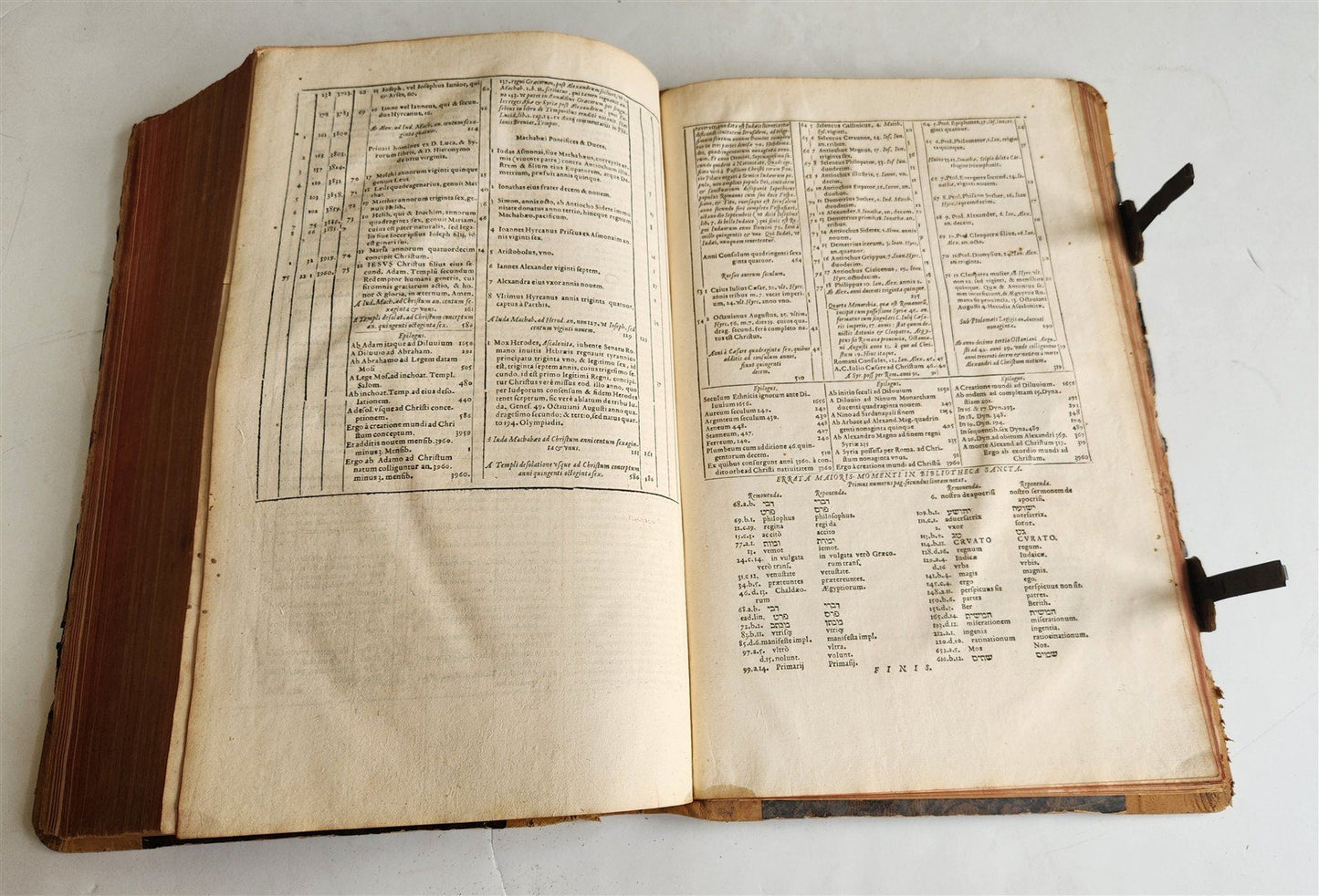
1575 BIBLIOTHECA SANCTA by Sixtus of Siena antique 16th century FOLIO
1575 BIBLIOTHECA SANCTA by Sixtus of Siena antique 16th century FOLIO
Regular price
$699.30 USD
Regular price
$999.00 USD
Sale price
$699.30 USD
Unit price
per
Couldn't load pickup availability
Sixtus of Siena.
Bibliotheca Sancta.
Secunda editio, in qua est tabula Chronographica, secundum collationem temporum, omnium postremò edita.
Frankfurt, Basse (for Oporinus); 1575
4 leaves, 733 pages, 1 blank leaf, 6 leaves, 20 leaves (Appendix & Index).
Half leather over wooden boards with 2 brass clasps
- CD 16 S 6601.-
Eight books on the interpretation, structure, language, authors and commentators of the Holy Scriptures
(cf. Wetzer/Welte XI, 384f.).
Monastery stamp on main title, subheading to 'Tabula Chronographia' trimmed
Some faded dampstains and wormholes at the last leaves, worn binding
folio. Size: 10 by 15 3/4 inches
Text in Latin
====================
Sixtus of Siena (or Sixtus Senensis) (1520–1569) was a Jew who converted to Roman Catholicism, and became a Roman Catholic theologian.
He began his career as a Franciscan preacher, speaking throughout Italy. Though he was convicted to die in Rome for the crime of heresy or recidivism, he was saved by a Dominican inquisitor, the future Pope Pius V, who repealed the condemnation when Sixtus recanted and pledged to transfer to the Dominican Order instead. He is considered one of the two most outstanding Dominican scholars of his generation.
He had as a master Lancelotto Politi, some of whose writings he later publicly criticised. Sixtus apparently destroyed all his remaining manuscripts and writings before his death.
Sixtus coined the term deuterocanonical to describe certain books of the Catholic Old Testament that had not been accepted as canonical by Jews and Protestants but which appeared in the Septuagint, and the definer for the Roman Catholics of the terms protocanonical and the ancient term apocryphal.
His work Bibliotheca sancta ex præcipuis Catholicæ Ecclesiæ auctoribus collecta (Venice 1566) treats the sacred writers and their works, the best manner of translating and explaining Holy Writ, and gives a copious list of Biblical interpreters, in eight books. It was the first of the genre of encyclopedic teaching repertories of dogma and Church tradition issued in the wake of the Council of Trent.
=====================
Thank You
Refund Policy: We will issue a FULL REFUND, 100% money back if you are not satisfied with your purchase. Items must be returned to us within 20 days in order to receive a refund or replacement. Buyer is responsible for shipping costs.