Motka
1585 HISTORY NATURE & POWER of MEDICINAL DRUGS by C. Acosta antique ILLUSTRATED
1585 HISTORY NATURE & POWER of MEDICINAL DRUGS by C. Acosta antique ILLUSTRATED
Regular price
$2,198.00 USD
Regular price
$3,140.00 USD
Sale price
$2,198.00 USD
Unit price
per
Couldn't load pickup availability
Acosta, Cristóbal (1525-1594)
Trattato di Christoforo Acosta Africano Medico, & Chirurgo della Historia, Natura, et Virtu delle Droghe Medicinali & altri semplici rarissimi, che vengono portati dalle Indie orientali in Europa, con le figure delle piante ritratte, & disegnate dal viuo poste à luoghi proprij.
Venice: Francesco Ziletti; 1585
(Treatise by Christopher Acosta Africanus, Physician and Surgeon, on the History, Nature, and Powers of Medicinal Drugs, and Others…)
Rare and first edition in Italian, translated from the Spanish of the first edition (Burgos, 1578).
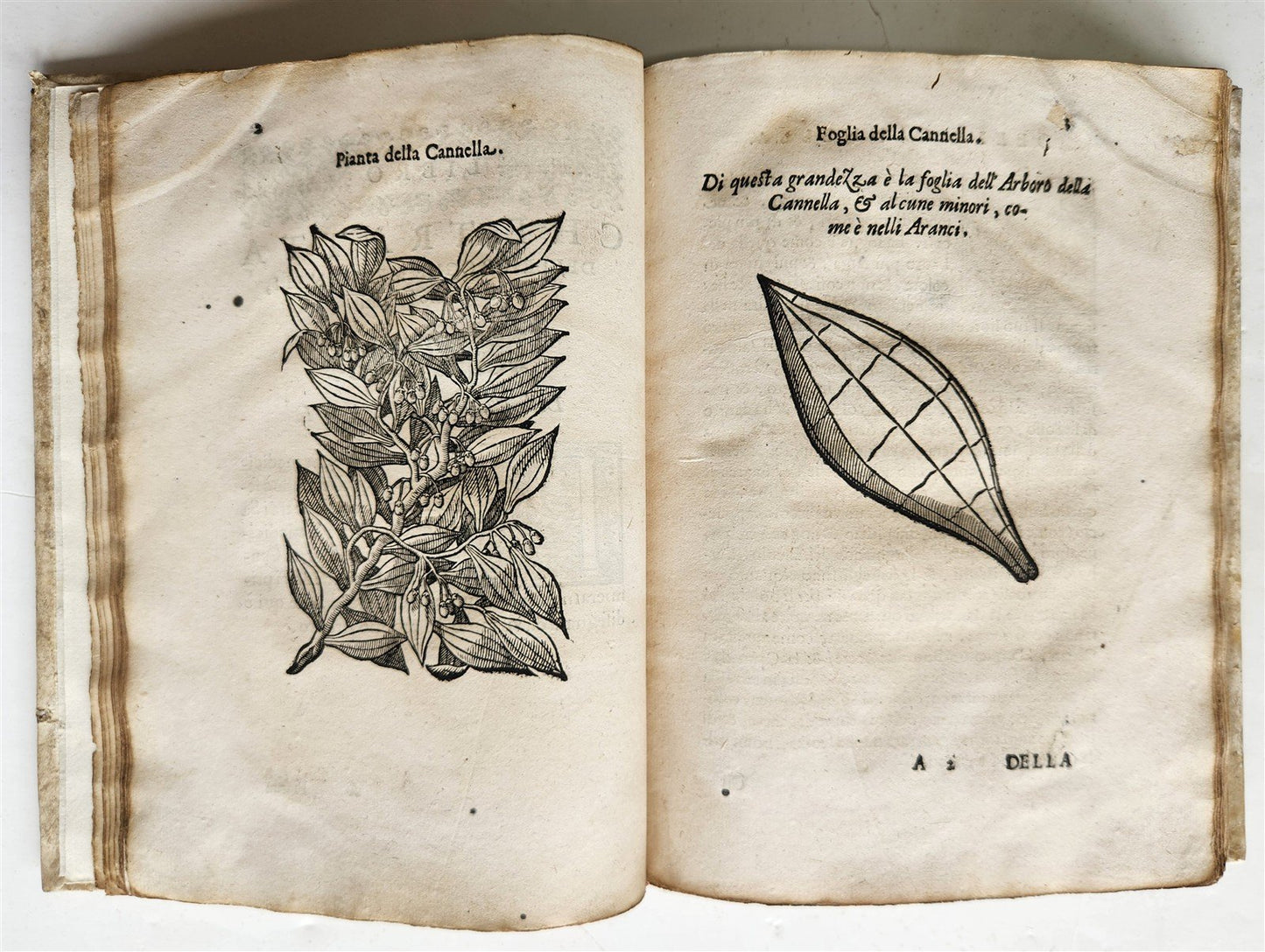
Beautifully illustrated edition with 45 full-page woodcuts of plants and fruits "drawn from life in their natural habitats" and 2 zoological engravings depicting Indian elephants, as well as a typographical mark and several decorative capitals. With a treatise on elephants at the end.
Illustrations in the text depicting drugs and spices: cinnamon, black pepper, cloves, nutmeg, macer, pavate, galangal, tamarind, palm, pineapple, cardamom, indigo, opium and many others.
(Light marginal toning throughout. Last few of leaves with some marginal repair)
Full vellum , manuscript title to the spine (new endpapers)
Size 7 by 9.5"
Text in Italian
==================================
Cristóbal Acosta (Christophorus Acosta Africanus (c. 1525 – c. 1594)) was a Portuguese doctor and historian whose pioneering work on Asian plants was originally published in Spain in 1578.
He is considered a pioneer in the study of plants from Asia, especially their use in pharmacology.
Together with the apothecary Tomé Pires and the physician Garcia de Orta he was one of the pioneers of Indo-Portuguese medicine.
The book offered was translated into Italian and published in Italy in 1585 by Francesco Ziletti, who also added additional plates. While considered a seminal botanical work, it is generally acknowledged not to be wholly original, as much of it was derived from Garcia de Orta's Colóquios dos Simples e Drogas da India, published in 1563.
The final section of Acosta's work provides the first images of the Asian elephant printed in Europe.
======================