Motka
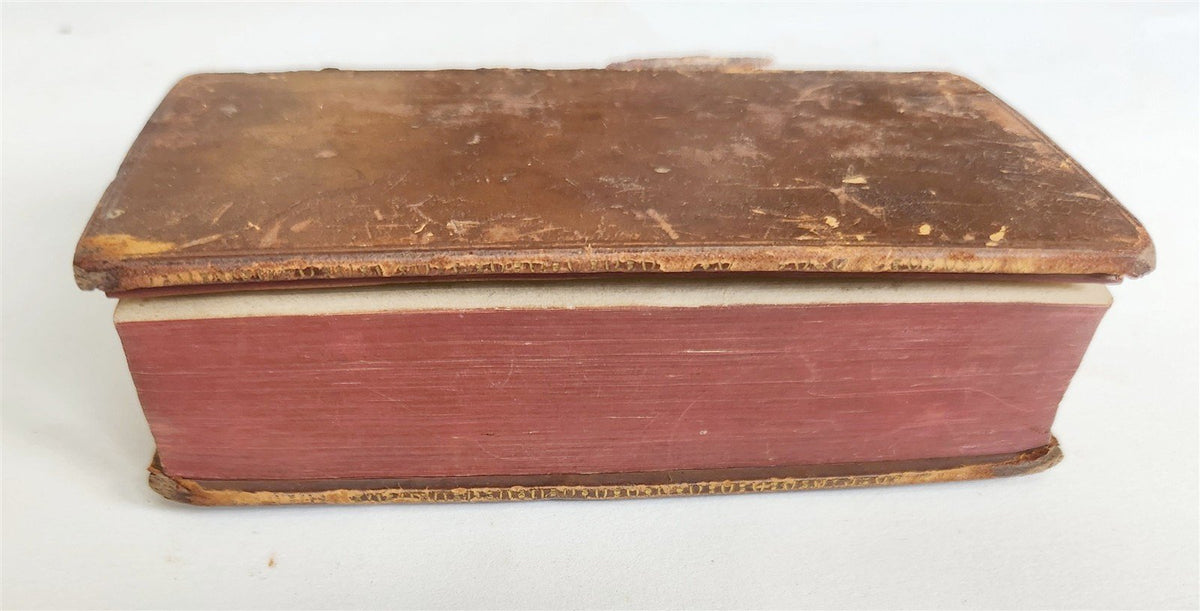
1636 DISCIPLINIS by father of modern psychology Juan Luis Vives ANTIQUE
1636 DISCIPLINIS by father of modern psychology Juan Luis Vives ANTIQUE
Regular price
$449.40 USD
Regular price
$642.00 USD
Sale price
$449.40 USD
Unit price
per
Couldn't load pickup availability
De DISCIPLINIS
LIBRI xii
by Juan Luis Vives
Leyden (Lugduni Batavorum); 1636
Very good interior condition, some wear of binding, small damage to the lower end of the spine
size : 4 1/2 by 6 3/4"
Text in Latin
======================
Juan Luis Vives y March (1493- 1540) was a Spanish (Valencian) scholar and Renaissance humanist who spent most of his adult life in the southern Habsburg Netherlands.
His beliefs on the soul, insight into early medical practice, and perspective on emotions, memory and learning earned him the title of the "father" of modern psychology.
Vives was the first to shed light on some key ideas that established how psychology is perceived today.
Luis Vives was born in Valencia to a converso family which had converted from Judaism to Christianity, in the case of his mother's side of the family, several decades before the Alhambra Decree.
While still in Spain, he attended the University of Valencia (Estudi General), where he was taught by Jerome Amiguetus and Daniel Siso.
Vives later recalled that the school was dominated by scholasticism, with the dialectic and disputation playing a central role in delivering of education:
Even the youngest scholars are accustomed never to keep silence; they are always asserting vigorously whatever comes uppermost to their minds, lest they should seem to be giving up the dispute. Nor does one disputation, or even two a day prove sufficient, as for instance at dinner. They wrangle at breakfast; they wrangle after breakfast; they wrangle before supper and they wrangle after supper. At home they dispute, out of doors they dispute. They wrangle over their food, in the bath, in the sweating room, in the church, in the town, in the country, in public, in private. At all times they are wrangling.
His mother, Blanquina, born 1473, was investigated by the Inquisition for the heresies of being a Marrano and a Judaizer in 1491. She admitted that as a girl of nine, her own mother had insisted following their conversion that their family continue to celebrate Yom Kippur.
On displaying that she was able and willing to recite the Nicene Creed, she was acquitted. She died of the plague in 1508, when Vives was 15 years old; in 1509 he left Spain never to return.
In around 1524, Vives' father, grandmother, and great-grandfather, as well as several other members of their wider family, were convicted and executed by the Inquisition for Crypto-Judaism, after his uncle was caught hosting a secret synagogue inside his house.
A few years later (c. 1528), allegedly to avoid providing doweries to Vives' sisters, local authorities brought up their mother's heresy investigation once again. Based on her own Yom Kippur testimony, Blanquina Vives' corpse was re-exhumed and posthumously burned at the stake.
Even though his own belief in Roman Catholicism was very genuine and sincere, Vives was living at the time in Thomas More's house in Chelsea and entered a severe depressive state.
=====================================