Motka
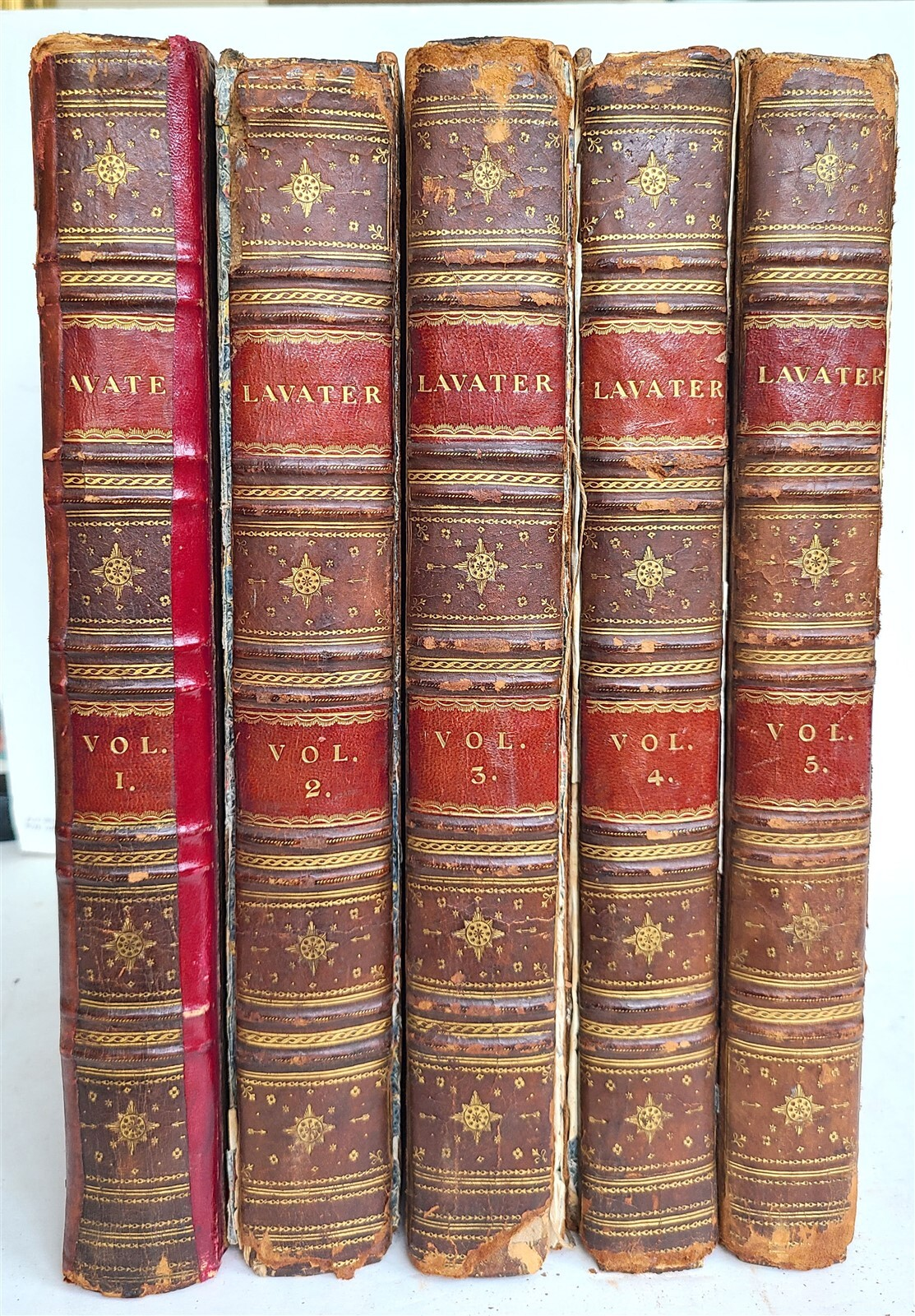
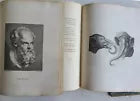
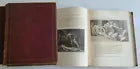
1810 PHYSIOGNOMY Johann LAVATER 5 VOLUMES antique ILLUSTRATED FOLIO in ENGLISH
1810 PHYSIOGNOMY Johann LAVATER 5 VOLUMES antique ILLUSTRATED FOLIO in ENGLISH
Regular price
$1,299.90 USD
Regular price
$1,857.00 USD
Sale price
$1,299.90 USD
Unit price
per
Couldn't load pickup availability
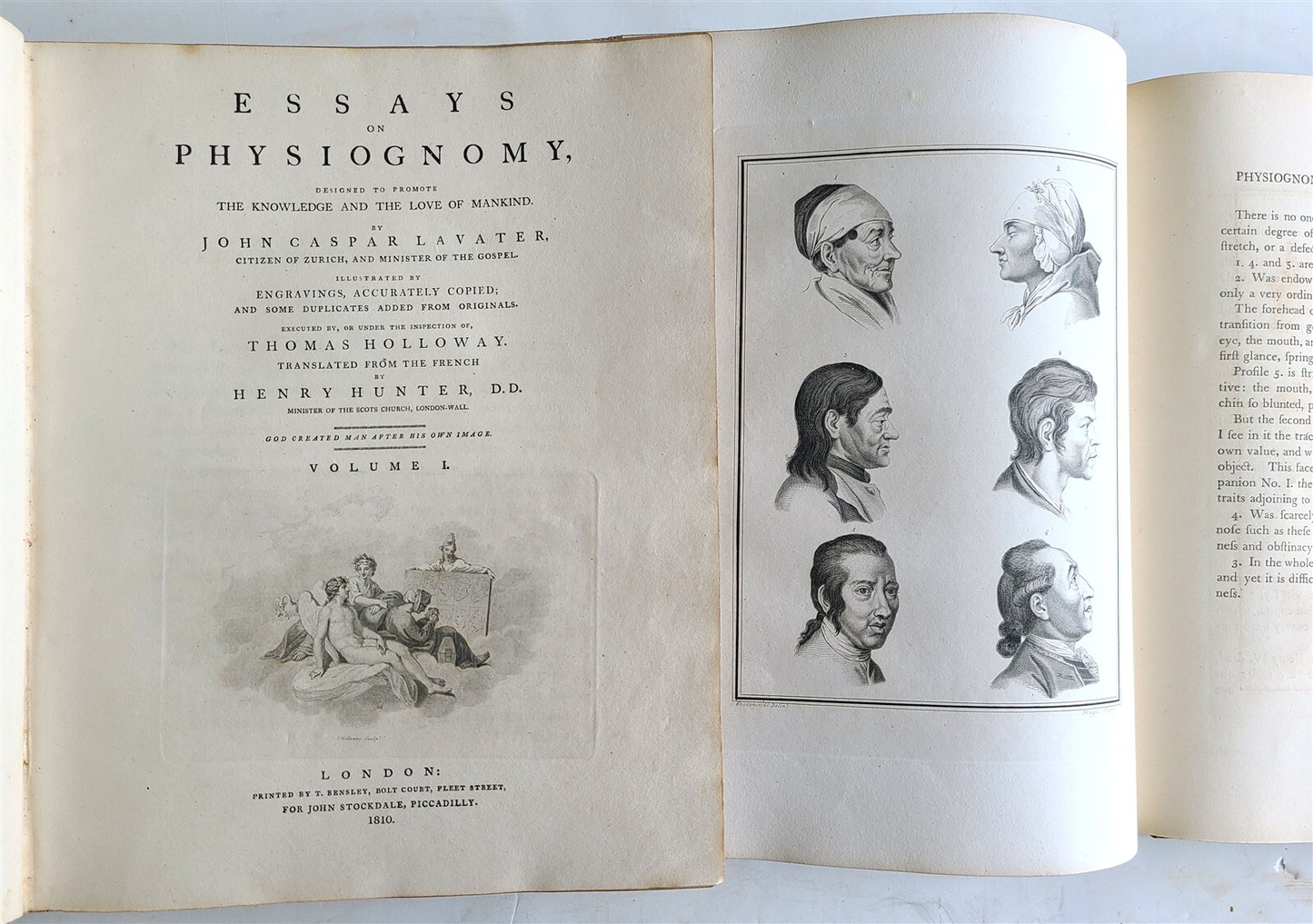
Essays on physiognomy; designed to promote the knowledge and the love of mankind.
by Johann Kaspar (or Caspar) Lavater
Translated from French by H. Hunter.
3 parts in 5 volumes.
London, Bensley for Stockdale ; 1810
Folio. Size: 11 1/2 by 13 3/4"
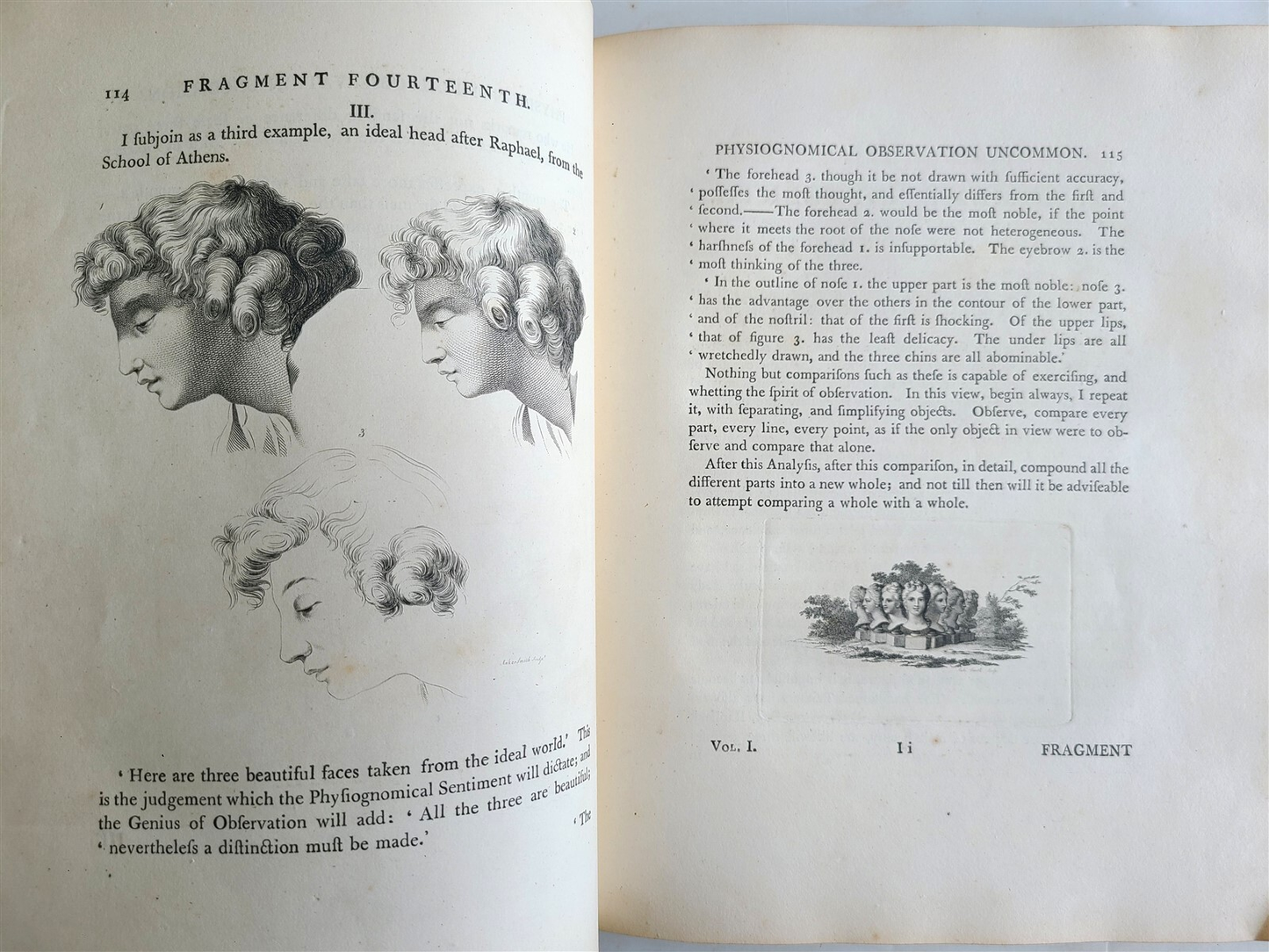
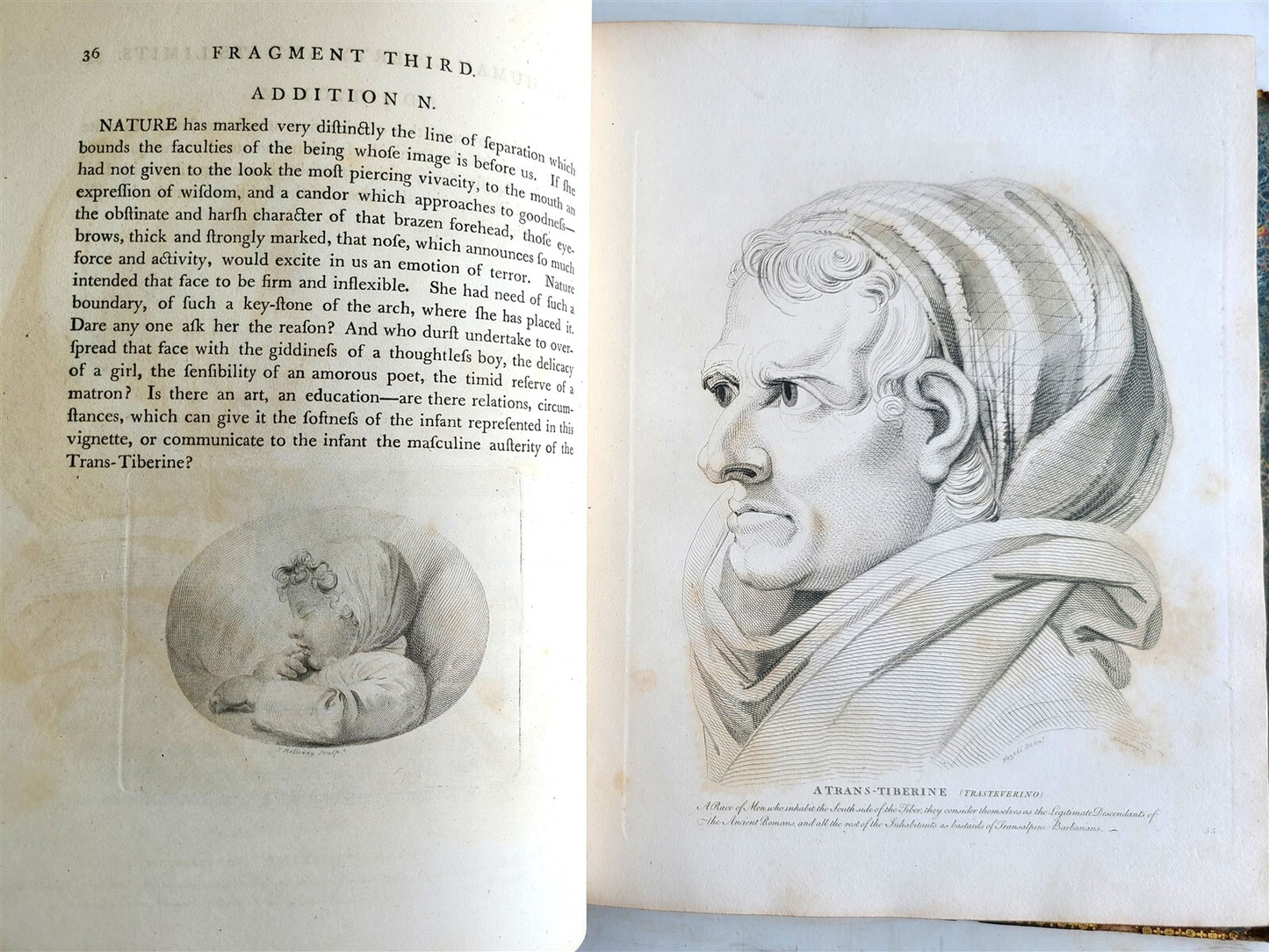
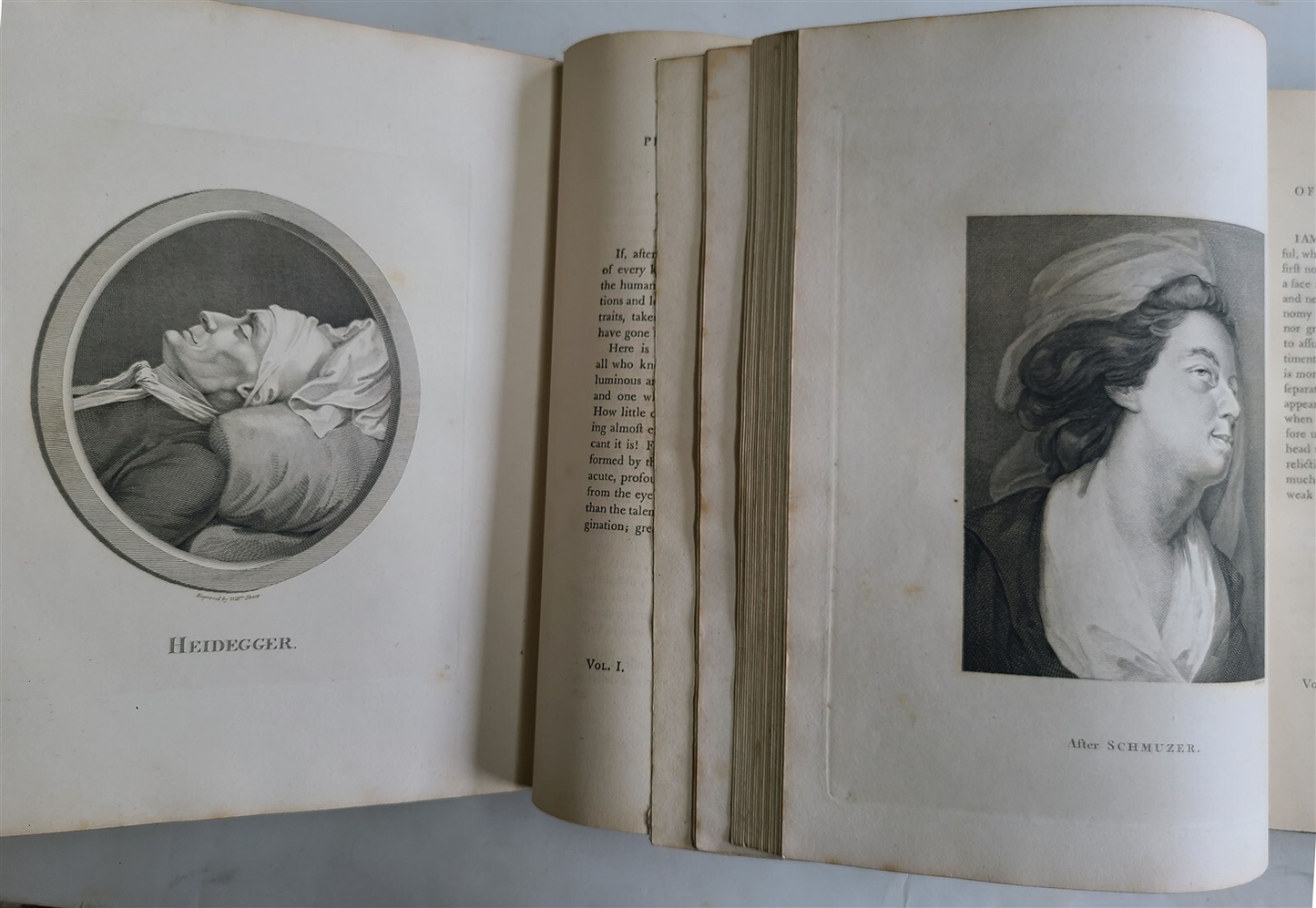
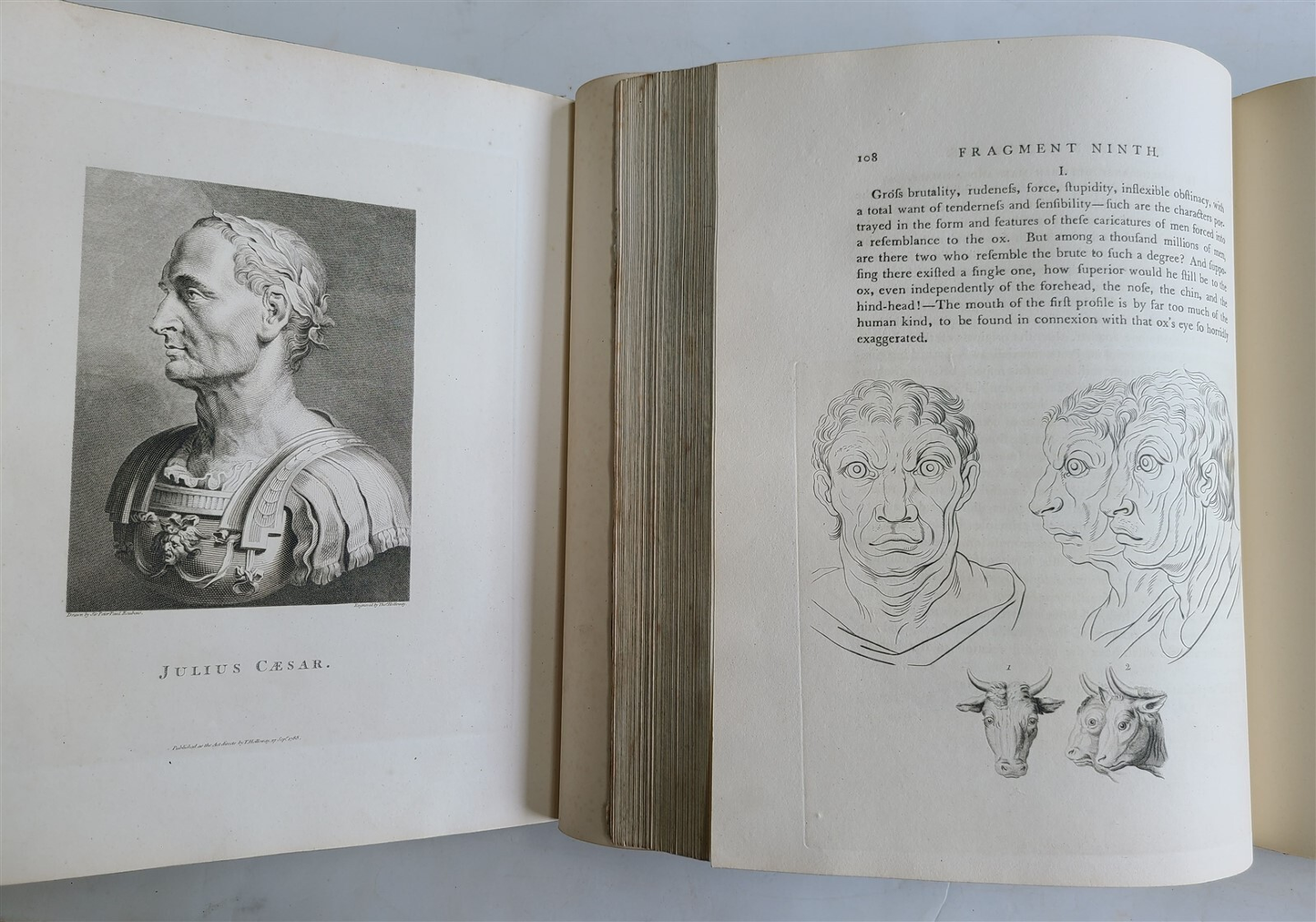
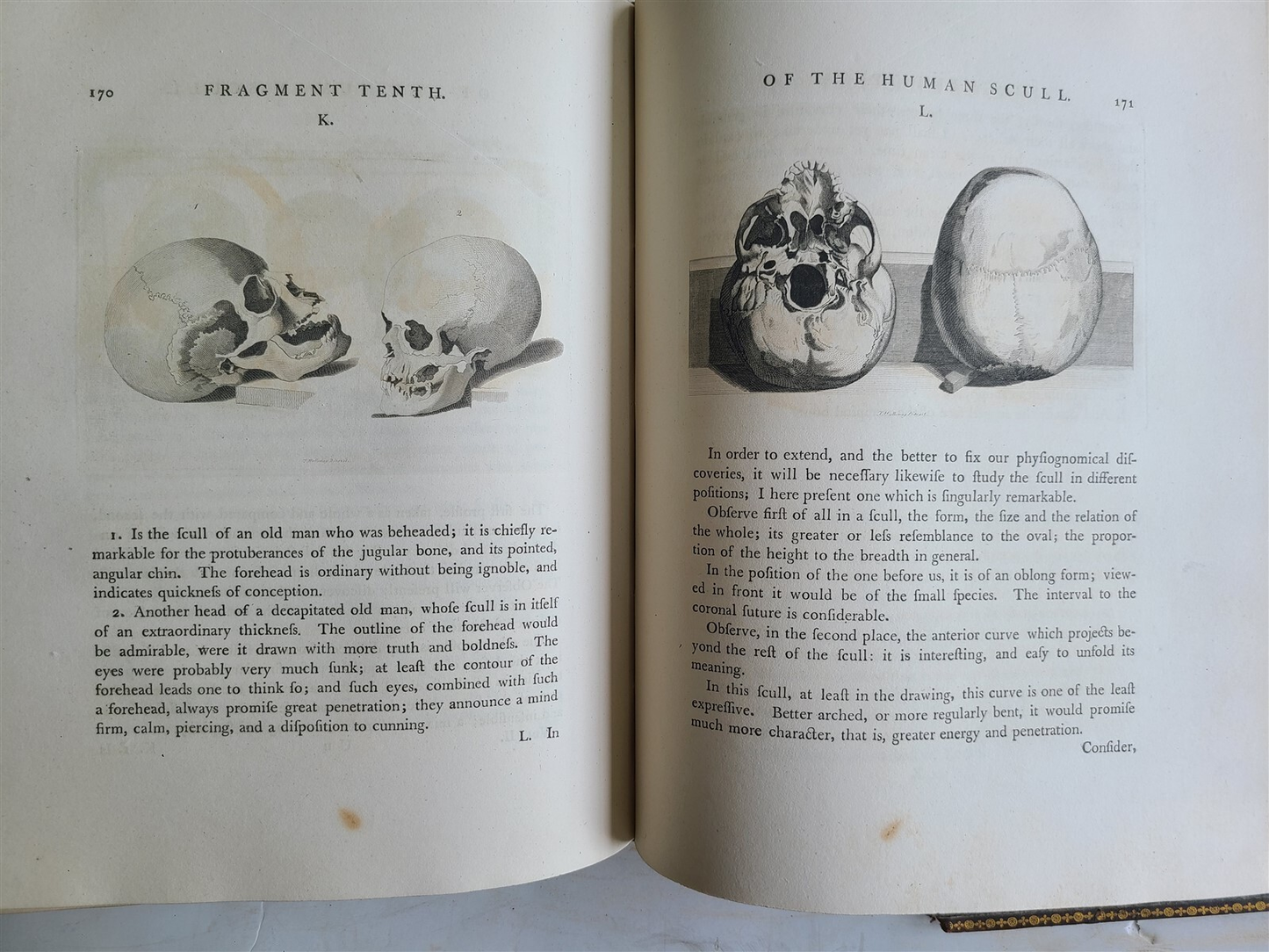
With 3 engraved title vignettes, 172 copperplates and about 360 text engravings.
Original leather ruled in gilt.
Spines with raised bands and title labels, decorated in gilt.
Bindings worn, covers detached, one volume with repaired spine.
Very good interior.
-Schulte-Str. 77 f. Note. See Goed. IV/1, 264, 31-c; Wellcome III, 458; Kippenberg 582; Lowndes II, 1321 and Brunet III, 887. -
The magnificent engravings, only partially identical with the more extensive German edition, here after Th. Holloway engraved by Barlow, Blake, Caldwall, Gillray, Heath, Rhodes, Taylor and others
With bookplates
Very heavy set. Weight 33 lbs
Text in English
=========================================
Johann Kaspar (or Caspar) Lavater (1741 – 1801) was a Swiss poet, writer, philosopher, physiognomist and theologian.
Lavater is most well known for his work in the field of physiognomy, Physiognomische Fragmente zur Beforderung der Menschenkenntnis und Menschenliebe, published between 1775 and 1778.
He introduced the idea that physiognomy related to the specific character traits of individuals, rather than general types.
Lavater is attributed with catalysing a golden age for silhouettes through this work in physiognomy. According to him, the character of a person could be elucidated through examining their “lines of countenance”. The most accurate of readings were facilitated by the tracing of a profile outline portrait. This contour line could be filled with black or cut from the white paper and placed over a black backing. More often, the silhouette was simply cut from black paper. In the chapter “On Shades”, Lavater wrote, “What can less the image of a living man be than a shade? Yet how full of speech! Little gold, but the purest."
The fame of this book, which found admirers in France and England as well as Germany, rested largely upon the handsome style of publication and the accompanying illustrations.
The two principal sources from which Lavater developed his physiognomical studies were the writings of the Italian polymath Giambattista della Porta, and the observations made by Sir Thomas Browne in his Religio Medici (translated into German in 1748 and praised by Lavater)
Lavater's studies have also been related to Franz Xaver Messerschmidt's work as a sculptor. His work being mentioned by Ernst Gombrich described as a physiognomical fallacy
============================
n order to receive a refund or replacement. Buyer is responsible for shipping costs.